
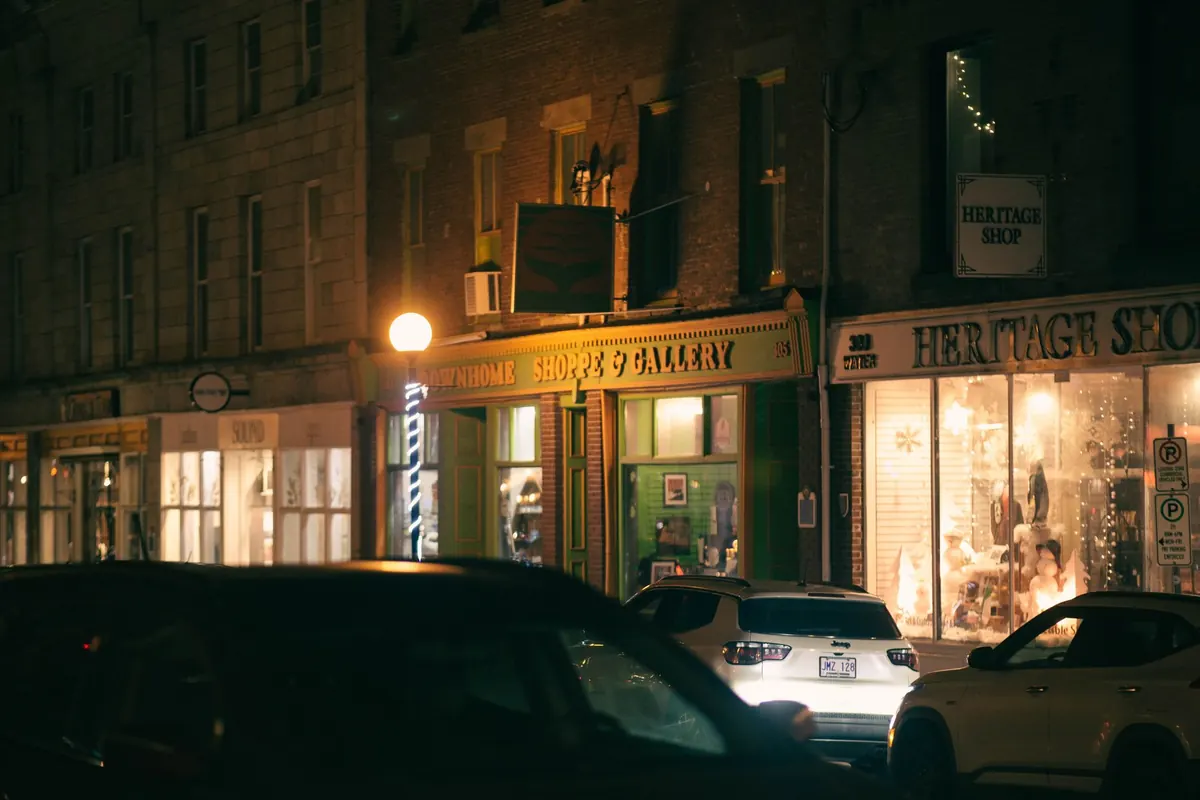
Corner stores are the punctuation marks of a neighborhood. They mark the end of a block, the start of a walk home, the place where you realize you forgot the milk. In 1975, Elmwood’s corners were busy with hand-lettered signs, produce stands, and shopkeepers who knew your family’s standing order. By 2025, many of those same corners look different: glass storefronts, QR codes, a different kind of errand. The buildings remain, but the economy inside them has turned over. Looking at both eras side by side is a way to read Elmwood’s last fifty years.
The 1975 Corner Store: A Little of Everything
In 1975, a corner store in Elmwood was rarely just one thing. A typical shop at, say, Maple and Third might sell canned goods, bread, cigarettes, and penny candy. The owner lived upstairs or a few blocks away. You could buy a single egg, a quarter pound of bologna, or a newspaper. The butcher shop on the next corner might close at 6 p.m., but the grocery stayed open until nine. People walked. Kids ran errands with a note and a few dollars. The store was a social hub: a place to hear about a lost dog, a church rummage sale, or a job opening at the plant.
What the shelves held
- Staples: milk, bread, eggs, butter, flour, sugar
- Local goods: produce from nearby farms in season, homemade pickles, baked goods
- Services: credit ledgers, check cashing, package drop-off, key cutting
- Information: bulletin board, town gossip, job leads
That mix mattered. A corner store was a small business, but it was also infrastructure. It filled gaps that supermarkets and chain stores left behind, and it did so on foot.
The Slow Unraveling: 1980s to 2000s
The corner store didn’t vanish overnight. It was squeezed. Supermarkets grew bigger and cheaper. Malls pulled shoppers away from Main Street. Chain drugstores and convenience stores offered longer hours and standardized prices. Cars made it easy to drive to a strip mall for a week’s groceries. Zoning codes often favored parking lots over small storefronts. By the 1990s, many Elmwood corners had gone quiet. Some became storage, some became offices, some were torn down. The corner store that survived often specialized: a deli, a bakery, a hardware store, a pharmacy.
What Actually Survived
Walk Elmwood’s commercial streets today and you can still find the descendants of those 1975 shops. They survived by adapting. The family grocery that added sandwiches and a coffee urn became a lunch spot. The butcher who started smoking his own meats found a niche. The bakery that began selling wholesale to restaurants kept its retail counter. The corner pharmacy added greeting cards and a postal counter.
- Delis and bodegas: still selling single items, still open early and late.
- Ethnic groceries: new arrivals brought new staples, new smells, new reasons to walk.
- Barbershops and salons: service businesses that need a physical spot and a steady chair.
- Hardware stores: small, knowledgeable, and stubbornly useful for a single bolt or a screen repair.
- Coffee shops: the new “third place,” though often with higher rents and different hours.
The 2025 Corner Store: New Faces, New Rules
Today’s Elmwood corner store may sell coffee, phone cases, or vape pens. It may be a boutique fitness studio, a tattoo parlor, or a small office. The economics have shifted from goods to services and experiences. Rent is higher. Labor is tighter. Online shopping takes a bite out of retail. But some things remain: the need for a quick purchase, a friendly face, a place to duck out of the rain.
What’s on the shelves now
- Convenience items: snacks, drinks, phone chargers, lottery tickets
- Services: notary, printing, key cutting, package pickup
- Food: prepared sandwiches, empanadas, smoothies, single-serve ice cream
- Community: flyers for yoga, lost cats, city meetings
The corner store is less about weekly groceries and more about daily stops. That shift is not nostalgia. It is arithmetic. A small shop cannot compete on price with a big-box store, so it competes on proximity and speed.
Reading the Storefront: What the Changes Tell Us
The shifts on Elmwood’s corners track the local economy. In 1975, many residents worked in manufacturing, trades, or nearby offices. They shopped close to home because they walked or took the bus. By 2025, work is more likely to be service-sector, remote, or gig-based. People still need convenience, but they also need Wi-Fi, outlets, and late hours. The corner store has become a place to grab a coffee, a lottery ticket, a prescription, or a sandwich.
The change also reflects who lives in Elmwood. Rents and home prices have climbed in many neighborhoods, pushing out some longtime residents and bringing in newcomers with different habits. The corner store that sells $6 lattes may sit next to a bodega that sells $2 sodas. Both can survive if the block has enough foot traffic and enough variety. But when a corner becomes only one thing—only luxury, only convenience, only vacant—the neighborhood loses some of its resilience.
How to Be a Good Corner Store Neighbor
If you want the corners of Elmwood to stay useful, you don’t need a grand plan. Small habits add up.
- Shop the small stuff. Buy your milk, your lottery ticket, your afternoon snack at the corner. A few dollars a week keeps a register ringing.
- Learn names. A shopkeeper who knows you is more likely to stock what you need and to watch the block.
- Be patient with change. New owners, new hours, new inventory. Give a place a few months before you decide it isn’t for you.
- Report problems. If a corner is dark, dirty, or unsafe, call the city or the landlord. Don’t just avoid it.
- Show up to meetings. Zoning, parking, and small-business permits are decided in rooms most people never enter. A few residents can make a difference.
- Spend where you want to see survive. If you value a walkable corner, spend there. If you don’t, don’t be surprised when it becomes a storage unit.
The corner store is not a museum piece. It is a working part of the local economy. In 1975 it sold you a loaf of bread. In 2025 it might sell you a latte and a phone charger. Either way, it is a place where the neighborhood meets itself. Keep that in mind the next time you pass one.
Photo: Erik Mclean / Pexels